Saturday, 19 September 2015

Manakau Heads and Awhitu Lighthouse


We were hoping for a good weather as we knew the views from Manukau Heads would be great.  Our destination was an hour and half from Auckland to a site largely unknown and  unvisited even by Aucklanders. As picturesque a countryside as you will find anywhere with signs and the feel of spring in the air.  A most pleasant day!

Manakau Heads is the narrow channel leading into Manakau harbor. Strong rip tides channel vast volumes of water though here  twice daily.We are looking west from the light house..

Gary is pointing east towards Auckland which we could see clearly from here.


This is looking out from Awhitu Regional Park  onto  Manukau harbour.


Saturday, 12 September 2015

Hobbiton the movie set


Perhaps the site achieving the most acclaim was made famous by the movie the Hobbit and the Lord of the Rings Trilogy.  We   knew we had to visit it, if only for our grandchildren's sake.

There were 45 of these in ground houses, called Hobbit holes

A number of the Hobbit holes had gardens, all maintained and cared for.

The occupation of the Hobbit could be discerned by carefully examining the surroundings

Originally they were built for the movie set, but later were constructed from natural materials to last for years.

All with the exception of one was built into the hills each spread over 15 acres.
No detail was left out. Even the lichen on the posts was added in some places to add authenticity.

They chose the site, not only for the picturesque terrain, but the added features of a little lake and ponds.

In the foreground is a chimney seemingly coming out of the ground,  in fact there are several in the background as well


Some were built to various size to accommodate filming requirements.--my attempt to look like a hobbit!

The overall site was beautiful This is an early spring shot on gorgeous day.  We picked a good one.

Even laundry was hung out.  The tree to the left is actually artificial, made from silicone and the leaves all sewed on .

I prize this shot, as it captured the character of the place for me.

Yep, a little window, on the side of a hill, a reminder that there was a home in there.

They spoke of the ales and beer brewed on site in keeping with the Hobbit tradition. 

This is "The Green Dragon" where the local brew and good times were to be had. We settled for the tamer Ginger Beer.
I was rather skeptical about the whole venture given the $75 tour fee, but in the end I was pleased.  The guide provided the background necessary to appreciate the experience.

The shire is located on a 1200 acre sheep farm two hours south of Auckland near a town called Matamata.

At the end of the tour we sat down and had a pint of  the tame stuff.


Gandalf  in a life size rendition

Saturday, 29 August 2015

90 Mile Beach


Travelling on a bus rarely generates a whole lot of excitement at the best of times. Of course if there are sites to see the appeal improves dramatically. On this occasion not only were the sites appealing, but the bus itself was somewhat different. Most of all it was what we were travelling on that made this trip unique.  For approximately 80 kilometers we drove on hard pack beach sand.

The novelty of the situation played upon my mind as the kilometers clicked by.  It was low tide and the expansive beach spread like a featureless runway.The sand was so smooth, nary a bump jarred my reverie.  On our left dunes of sand marked the beach head and the pounding surf of the ocean to the right was a constant reminder of where we were at.

This beach is called 90 Mile Beach named in the 19th century.  Horses
 would carry goods along the beach. Calculating how far a horse travels in a day it took three days to make the trip from one end to the other or 30 miles a day. However in sand the progress is impeded ever so slightly by softer under footing, hence the presumed miscalculation. It is actually about 85 kilometers.

We had to navigate streams of water,  periodically.  From what I gathered the ebb and flow of the tides flattened the stream beds out only proving to be a minor obstacle for the buses.

We stopped at our first creek bed which you can see to the right.  Arendje was taking a picture of our travelling companions. The bus provides perspective as to the breadth of the beach. Probably several hundred meters separated the ocean from the high tide mark.

This beach is a designated highway in New Zealand, As it is in the extreme north of the island it is not used extensively. We only saw a hand full of vehicles, mostly fishermen.


Saturday, 22 August 2015

Te Paki Giant Sand Dunes

Dunes occupy about 1,100 km of the New Zealand coastline. An impressive dunefield stretches 130 kilometres from Paekākāriki to Pātea on the west coast of the North Island, and several kilometres inland. Wide, almost flat beaches are framed by fore dunes, formed when wind-blown sands become trapped by plants and driftwood on the beach. If there is a ready supply of sands on the beach, more dunes may develop in front creating the wave like structure of the dunes. The dunes further back may be
stabilized by plants, 

or blown inland if there is insufficient  plants to impede their progress.

We engaged in what appeared to be the rather reckless sport of sand surfing.  Looking at the hill I thought one must be either addled or an adrenaline junky to consider this.  I must be both, guess who went first.  Right! Me!  All of them were younger than me, but with obvious more common sense.  It soon became apparent that sand surfing may look risky, yet was much tamer than first appearances, and still fun.  

The dunes are 17 kms from Cape Reinga.  A stream became our road with dunes towering above to the left and right.  The bus ride through the stream bed another first for me.


Cape Reinga

Cape Reinga  is where New Zealand begins or where the Maoir's  end their journey of life jumping from a gnarled pohutukawa tree, believed to be over 800 years old. According to Maori oral history, the spirits of deceased Maori leap from this tree into the ocean to return to their ancestral ancestral homeland  of  Hawaiki.

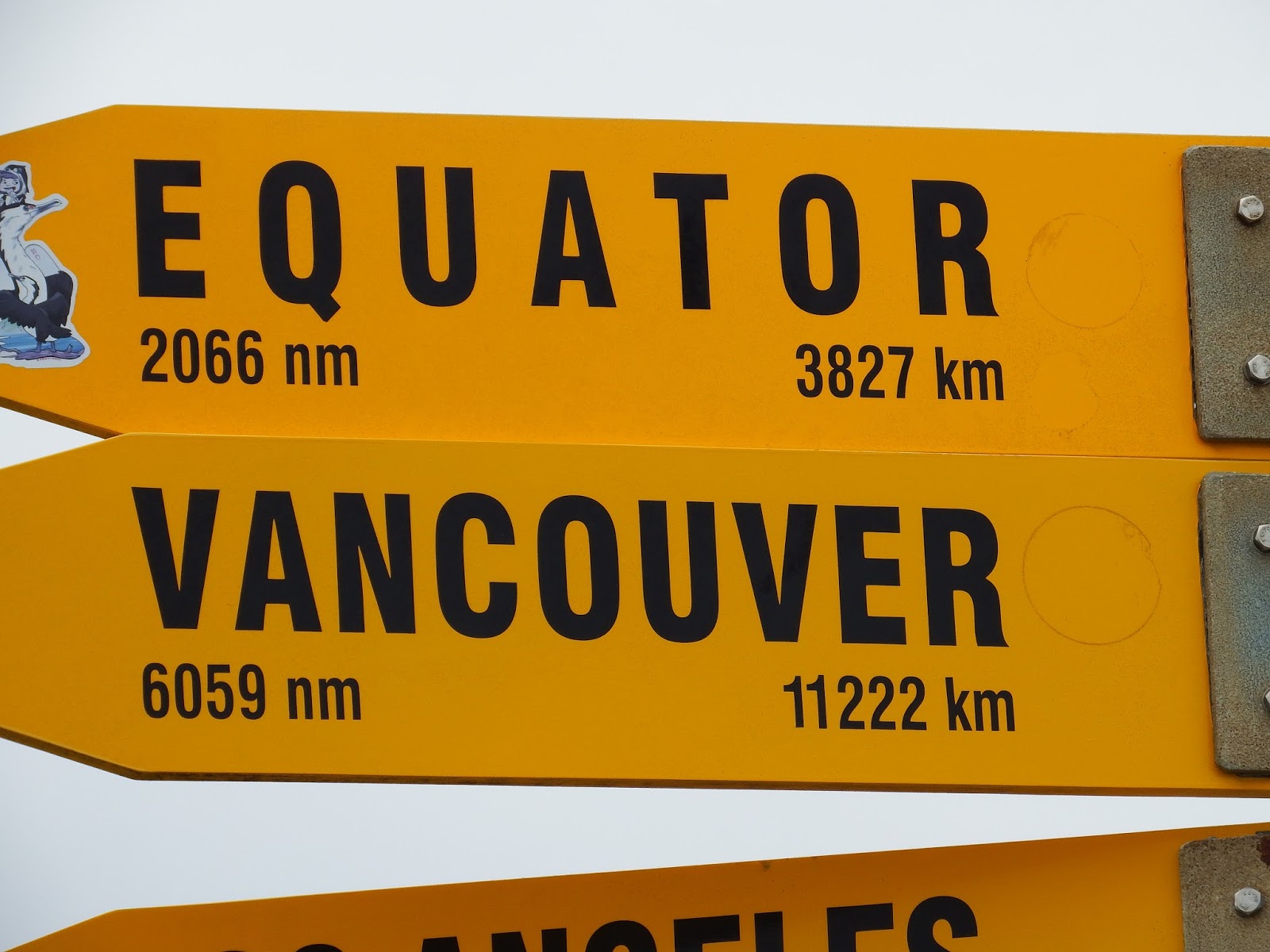
It is also where  Pacific Oceans meets the Tasman Sea... a literal collision of two giants with swirling white masses of waters to mark the spot.  This is considered sacred land and it indeed has an almost haunting presence about it.

The Pohuntukawa tree pictured to the right apparently never flowers.  It stands along on this barren chunk of rock defying wind and waves for centuries.  This is taken with a 60x zoom. It is a long distance from the light house.  Part of the oral legend springs from this particular tree.


This northern extremity of New Zealand is best described as a 100 kilometre peninsula with a scant few kilometres separating the vast ocean bodies. Red sands carpet the hillsides.  These are thought to be the legacy of eons of wind swept sands from the vast continent of Australia.  Winds were indeed strong out of the west on the day we ventured to this remote and intriguing site.

This was part of a day long adventure by tour bus.  Being a winter day there were few passengers aboard and not too many more at the actual cape.  Consequently we enjoyed near individual attention and discussion with the tour guide who offered a bus load of information throughout the course of the day.  Additionally we had front row seats with a view that would been hard to match in a car.

I took pictures galore. The day was pleasant enough, sufficiently warm to allow us to linger at the more interesting sites. We took up conversations with the other passengers from Germany, England, Australia and elsewhere. 

The next three entries are all part of this trip.  Arendje is after me to arrange trips to the islands but I am finding enough here to captivate my interests for a long time.